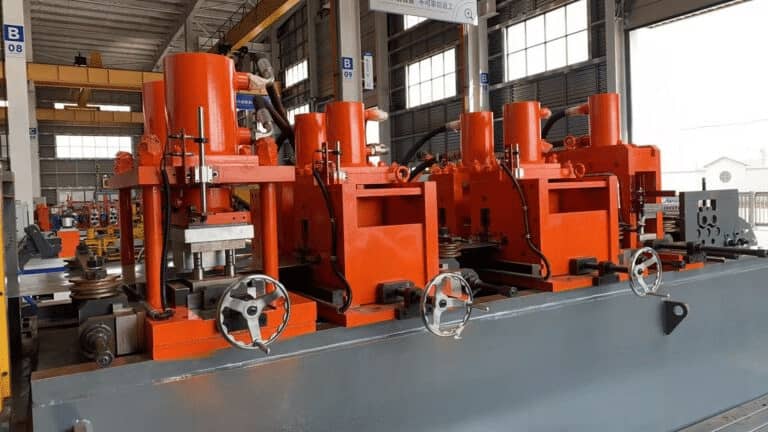
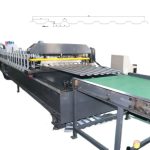
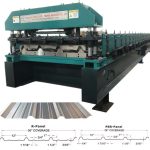
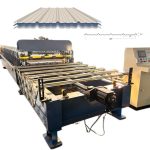

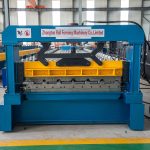
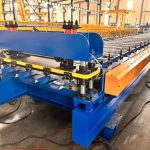
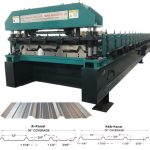
Metal Walk Panel Board Scaffolding Plank Roll Forming Machine is a cold bending and rolling production line, specialized in processing metal coils such as galvanized steel and color steel plates into scaffold treads or walking boards with specific cross-sectional shapes through multiple passes of continuous cold bending using rolling mills. The entire production line usually integrates automatic unwinding, servo feeding, multi roll forming, hydraulic cutting to length, and finished product palletizing, achieving fully automated continuous operation from raw material roll to finished board in one go. The equipment adopts a PLC control system as the core brain, combined with imported brand servo motors and hydraulic pump stations, which can set the length and hole parameters of the board according to production needs, and accurately control each forming pass and cutting action.
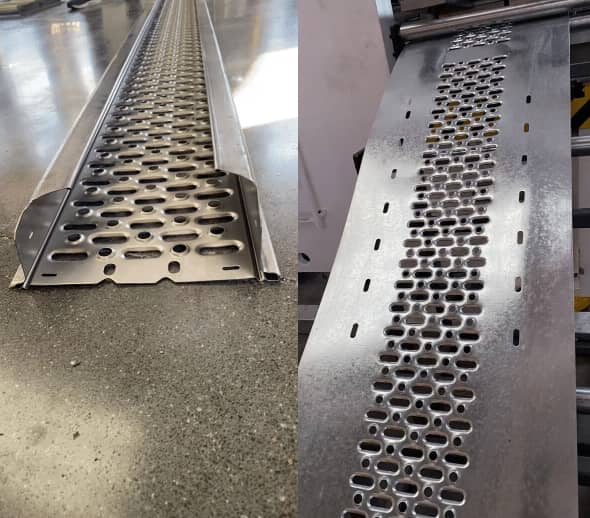
Application scenario: Covering homework requirements from multiple fields
1. Construction and high-altitude work platforms
This is the most core application area of the device. Steel scaffolding pedals, walking platform boards, and construction walkway boards are all the “specialties” of this equipment. The product is widely used in high-rise building construction external frames, indoor decoration mobile frames, bridge and tunnel maintenance platforms and other scenarios, providing stable and reliable underfoot support for operators.
2. Steel structure stairs and industrial platforms
Industrial plants, storage shelves, equipment maintenance channels, and other scenarios often require a large number of custom sized metal step plates. The scaffold board forming machine can directly produce stair treads and platform cover plates that meet the load-bearing requirements, with precise dimensions and easy installation.
3. Cable tray and ventilation duct support
Some improved models can accommodate the production of reinforced rib plates for cable tray bottom plates or ventilation ducts, expanding the application space of equipment in mechanical and electrical installation and HVAC engineering.
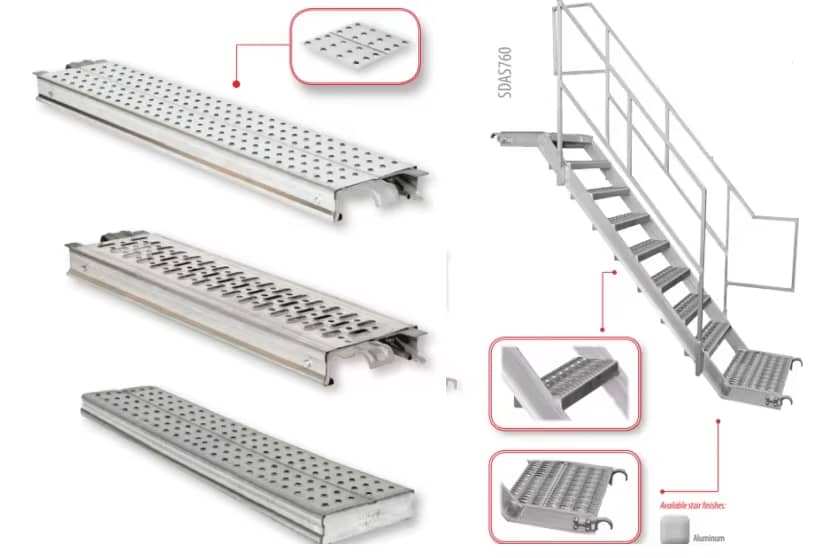
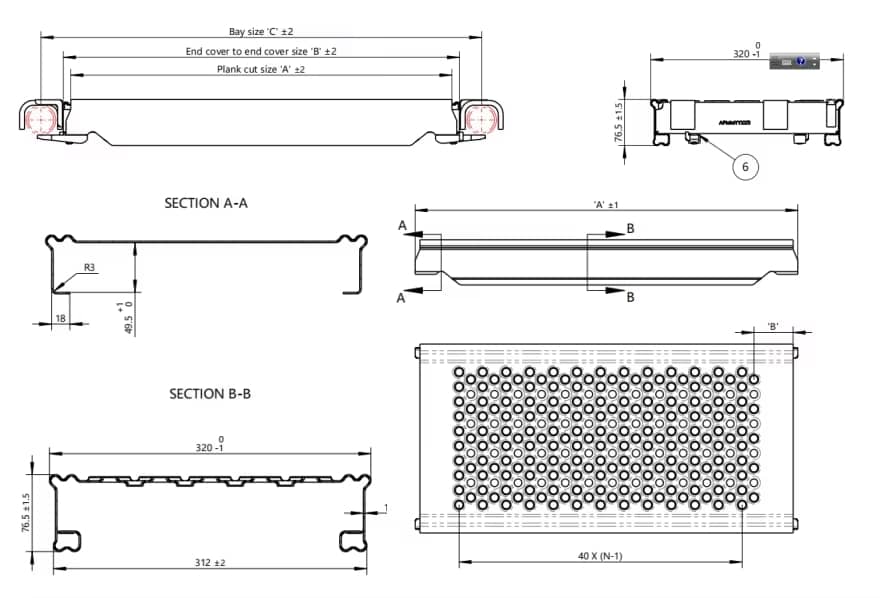
Pattern diagram of the machine:
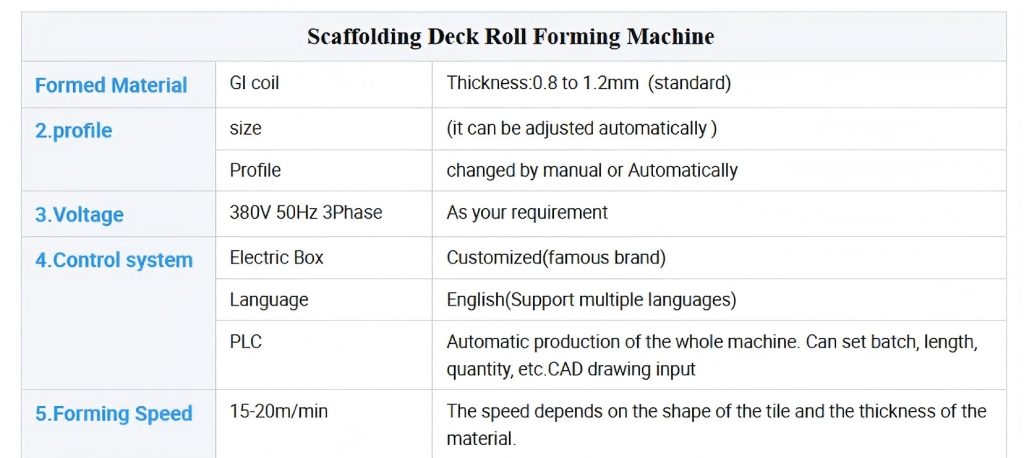
Product Attributes :
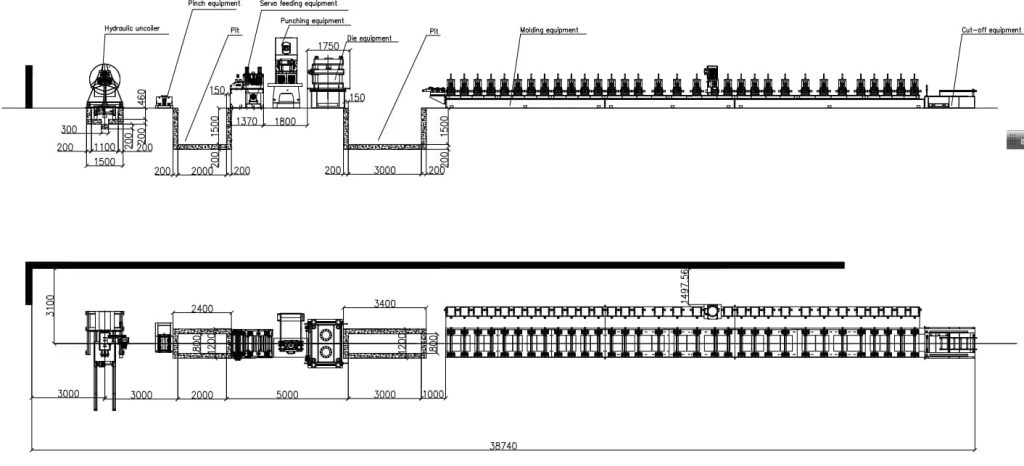
Working Flow:
Core feature: Directly targeting production pain points
1. Cold bending forming, once in place
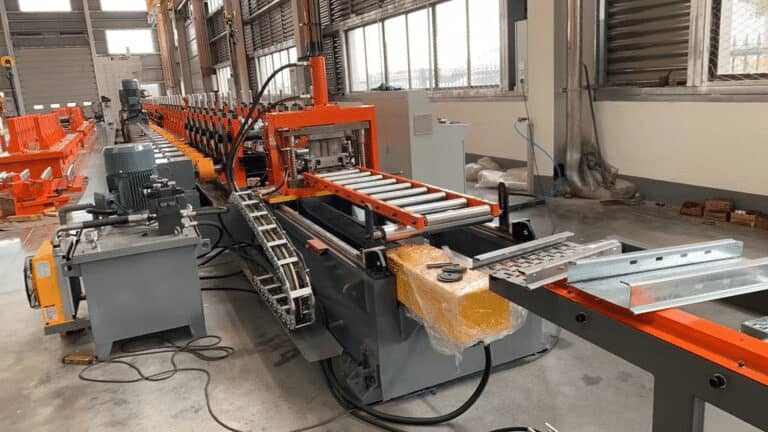
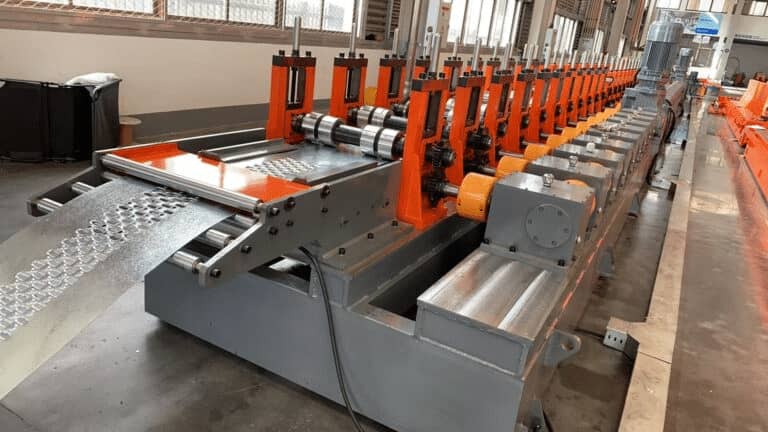
Different from the traditional step-by-step process of “shearing stamping welding polishing”, the rolling forming machine allows the coil to continuously pass through 18 to 29 sets of precision rollers, gradually bending and forming without the need for secondary welding. The finished product has high cross-sectional accuracy, smooth surface, and no hidden welding hazards, eliminating the risk of cracking and rusting of welding points after long-term use.
2. Automated operation, leap in production capacity
The equipment is equipped with a PLC automatic control system, which can achieve uninterrupted feeding and high-precision tracking and cutting. The production speed of conventional models can reach 8 to 16 meters per minute, and the production capacity of some high-speed models is even more considerable. The multi process that originally required 3 to 5 people to cooperate now only requires one person to be on duty for inspection, greatly freeing up labor and reducing labor and management costs.
3. Strong rigidity and durability
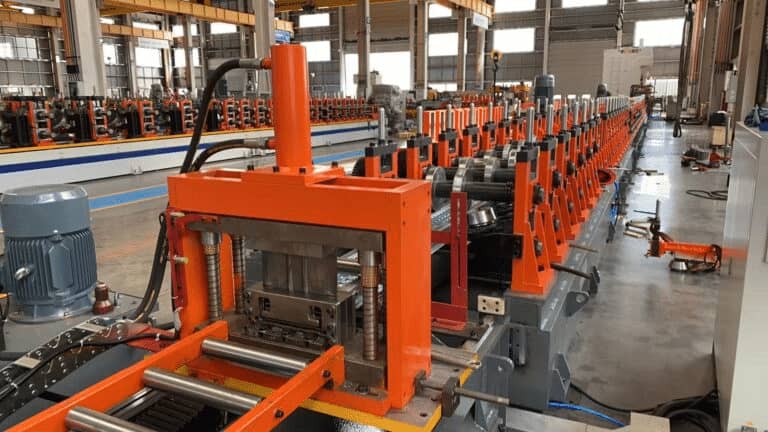
The main frame is mostly welded with 300-450mm H-beam, and the rolling mill is made of 45 # forged steel or GCr15 steel and chrome plated. The shaft diameter is thick and the rigidity is excellent. Combined with hydraulic column shear device and Cr12Mov advanced blade, it can withstand high frequency and thick plate (0.8-2.0mm) high load production conditions for a long time.
4. Flexible customization, one machine with multiple functions
The equipment can customize the feeding width (300-1250mm), forming pass, sheet thickness range, and even support integrated punching and forming design according to requirements. Whether it is a standard specification scaffold pedal or a special-shaped plate with special anti slip ribs or hook grooves, it can be flexibly responded to by adjusting the roller mold.